The Baylor experience is rooted in faith, guided by purpose and driven by a commitment to making a difference. As a nationally ranked Christian research university, our active, caring community provides the perfect blend of academic excellence, personal mentorship, big-time athletics and a place to find your calling and your people.
Academic Excellence
Learning at Baylor is personal, purpose-driven and designed to equip you not only for career success but also to lead and serve in a rapidly changing world.
Dig deeper by clicking on each box!
15:1 Student-to-Faculty Ratio
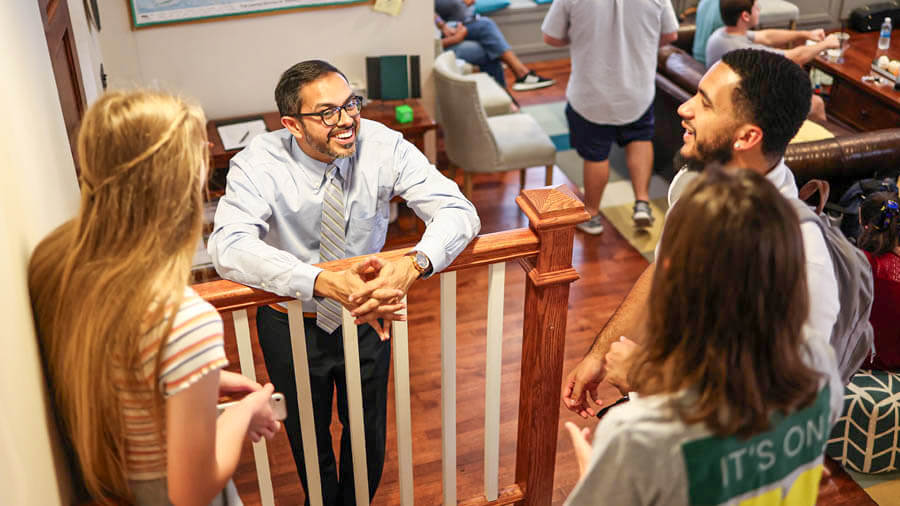
Baylor’s lower-than-average student-to-faculty ratio means faculty will know you by name and are more accessible to you inside and outside of class. Studies show this leads to better academic outcomes for students and an overall better learning environment.
#4 Best First-year ExperiencesU.S. News 2026 Best Colleges
Strong first-year experiences set the course for your college success. These experiences help you develop the essentials for academic achievement, community connections, mental and physical wellbeing, career preparation and progress toward personal goals.
#27 Best Undergraduate TeachingU.S. News 2026 Best Colleges
Baylor’s strength in undergraduate teaching rests in the quality of our faculty in the classroom and the investment they make in your success. More than 94% of undergrad classes are taught by Baylor professors, so you’ll learn from experts and researchers in their fields.
Top 10 Best Learning CommunitiesU.S. News 2026 Best Colleges
With 16 different learning communities, you’ll find a home that meets your academic and personal interests and builds community that supports you throughout college and beyond. Strong learning communities contribute to academic success and overall wellbeing.
Best Value Colleges The Princeton Review 2025
Princeton Best Value Colleges achieve in academics, affordability and career outcomes. Baylor’s high quality academic experiences, generous financial aid and robust career services support give you a significant return on your educational investment.
26 Average Class Size
Smaller classes give you the opportunity to form deeper relationships with your faculty and enjoy greater engagement in your classes. This leads to better understanding of complex subjects, timely graduation and successful pursuit of career or grad school goals.
Best Colleges for Future LeadersTime Magazine 2025
Based on an analysis of 4,000+ top leaders in the U.S., across multiple sectors, Time Magazine best colleges distinguish themselves in preparing some of the nation’s most influential leaders. The Baylor experience equips you for a lifetime of leadership in your chosen profession.
Elite academic opportunities
Baylor’s elite academic programs help highly motivated students achieve their ambitious research and career goals. These selective programs offer individualized, in-depth advising from faculty, immersion into research, and opportunities for flexibility within your major.
92% post-graduation success rate
From your freshman year, Baylor’s Career Services team empowers you with personalized guidance and unmatched opportunities. 92% of graduates are employed, in grad school, serving their country, or fulfilling volunteer service within six months of graduation.
Traditions run deep
Traditions run deep
As the oldest continuously operating university in Texas, Baylor has a long history of traditions that connect generations of bears in shared experiences that transcend time.
Join Our Traditions
Since the University opened its doors in May 1846, Chapel has been a part of the Baylor experience. Originally a daily requirement for all students, faculty and staff, today students are required to attend two days per week for two semesters. Inspirational, informative and entertaining programs bring an education to students that cannot be learned in a lab or calculated. The programs enjoyed at Chapel and the sacred time shared are significant gifts to the Baylor community. They help students remember their deeper callings and help them envision a greater good.
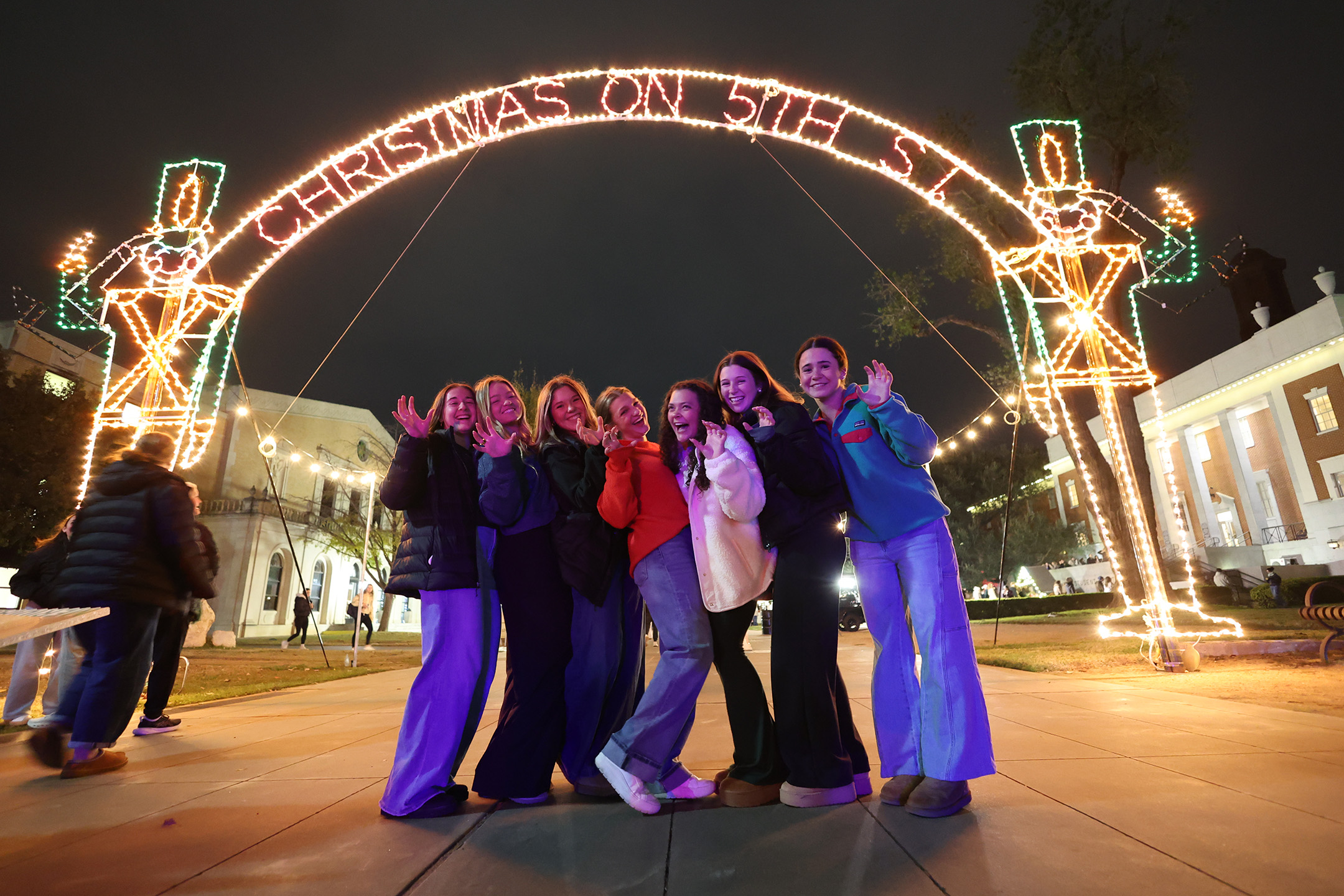
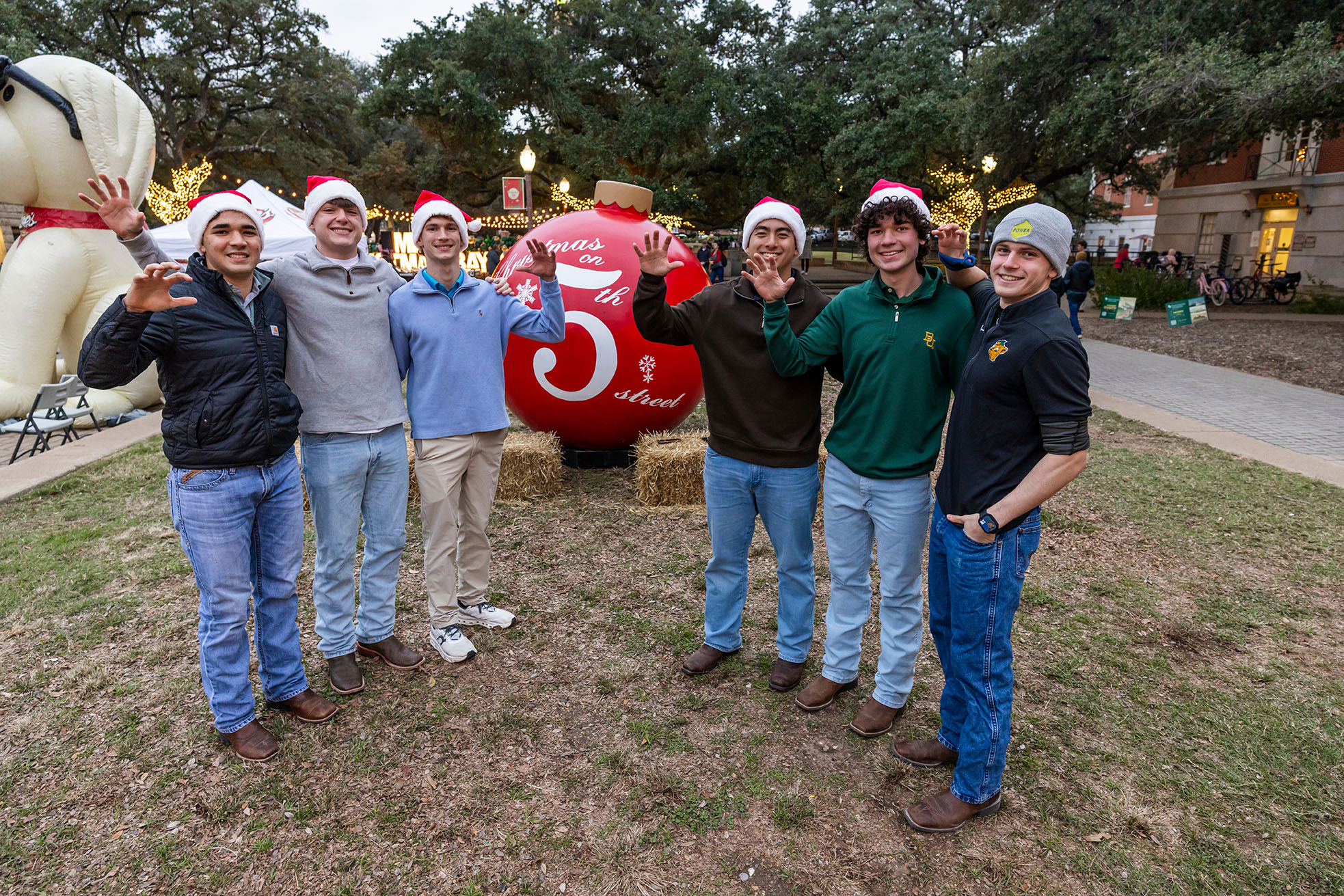
This annual Christmas celebration brings the sights and sounds of Christmas to campus just before the close of the fall semester. The festivities - which are held along Fifth Street, throughout the Bill Daniel Student Center, the Quadrangle, Fountain Mall and Traditions Plaza - include the lighting of a Christmas tree in the Quadrangle, carols, a live nativity scene, live music, carriage rides, and, of course, pictures with Santa. Baylor students, faculty, staff, alumni and the Waco community arrive on campus to enjoy all of the yuletide festivities.
This student holiday — also affectionately known for the last few decades simply as Dia — started in 1932 as a way to "bring smiles to the faces of students" by giving them a break from classes. The annual spring holiday gradually became a favorite pastime. Re-organized by the Baylor Chamber of Commerce in 1935, its popularity rapidly grew, and the name of the occasion through the years changed from All University Day to Physical Fitness Day to May Day. In 1966, students voted to name the annual occasion as "dia del oso" or "The Day of the Bear."
Dr Pepper Hour started out as Matinee Coffee Hour in 1952 when Mrs. Marie Mathis, assistant to the dean of the Student Union Building (now the Bill Daniel Student Center), began to serve coffee every week in the Barfield Drawing Room. The event often featured piano music and board games to allow the Baylor community to socialize and escape the typical school day. In 1953, Mrs. Mathis added hot chocolate, then frosted Coca-Cola when it got warmer outside. Until July of 1997, Coca-Cola was mixed with ice cream for the floats. Since then, Dr Pepper has become the official soft drink of the university, and thus the traditional gathering became known as "Dr Pepper Hour."
For more than 50 years, Baylor has welcomed the families of Baylor students to campus. Beginning as a single day in 1960, this special event has provided a unique opportunity to introduce the University to Baylor parents. By 1970, this event had grown into a full weekend, known as Parents Weekend (now Family Weekend) and featuring a student talent show, a parent and faculty coffee, and a dinner for parents held on the campus grounds. The events of Family Weekend combine to show parents the best of Baylor and all that it has to offer.
In 1978, Jack Chambers, '81, and his dad, Robert W. Chambers, '57, wanted to begin a tradition to celebrate Baylor athletic success, and thus requested that university leaders light the tower of Baylor's Pat Neff Hall green in celebration of Baylor athletic victories. With the assistance of the sophomore class and Herbert H. Reynolds, who was then executive vice president, the Chambers tandem accomplished their goal. Green floodlights were placed on the tower in the fall of 1978. They were first lit after a football victory over Texas A&M at College Station, serving as a beacon home for all the students who had made the trip to foreign lands to witness the victory.
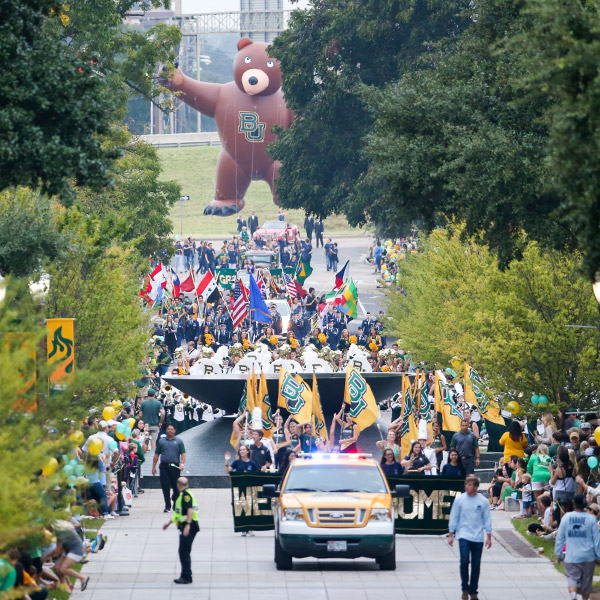
In November 1909, after six months of planning by faculty and students, large delegations of former students converged on the Baylor campus to participate in a concert, receptions, speeches, class reunions, singing, a parade, a pep rally and a football victory. It was Baylor's first "homecoming" which, except during the later years of World War II, has been an annual tradition and has grown to be the largest collegiate Homecoming celebration in the United States. The 1909 festivities are noted as the first recognizable collegiate homecoming celebration in the nation.
On the misty-rainy morning of January 22, 1927, a shattering tragedy caused a pall of sadness to engulf the campus and brought national attention to the University. In Round Rock, Texas, shortly before noon on that day, a speeding train smashed into a bus filled with Baylor basketball athletes and supporters. The accident left 10 dead and numerous others injured. To remember those who lost their lives, the names of the "Immortal Ten" are called out every year during Homecoming Week at the Freshman Mass Meeting. In 2007, the University erected a memorial to the Immortal Ten in Traditions Square.
During World War II, more than 4,000 Baylor men and women served in all branches of the armed forces. By the end of the war, 125 had made the supreme sacrifice in defense of their country — a mortality rate said to be double that of the nation's population at large. To commemorate those who had fallen, red granite lampposts were erected across campus to stand as a guard of honor by day and to illuminate the streets and paths by night. The first group of the granite "honor guards" was dedicated on October 25, 1946. A plaque, engraved with the name of one who died, was attached to every post, and the Baylor chapter of Angel Flight (now, Silver Wings Society) was charged with the responsibility of placing a wreath upon the plaque on the anniversary of each death. As the size of the campus increased, additional lampposts were erected and made available to commemorate the death of any loved one.
Baylor University’s legacy encompasses over 179 years of meaningful traditions. Your Baylor Ring is a tangible symbol of our university’s rich heritage and a lifelong emblem uniting you with Baylor alumni of the past, present and future.
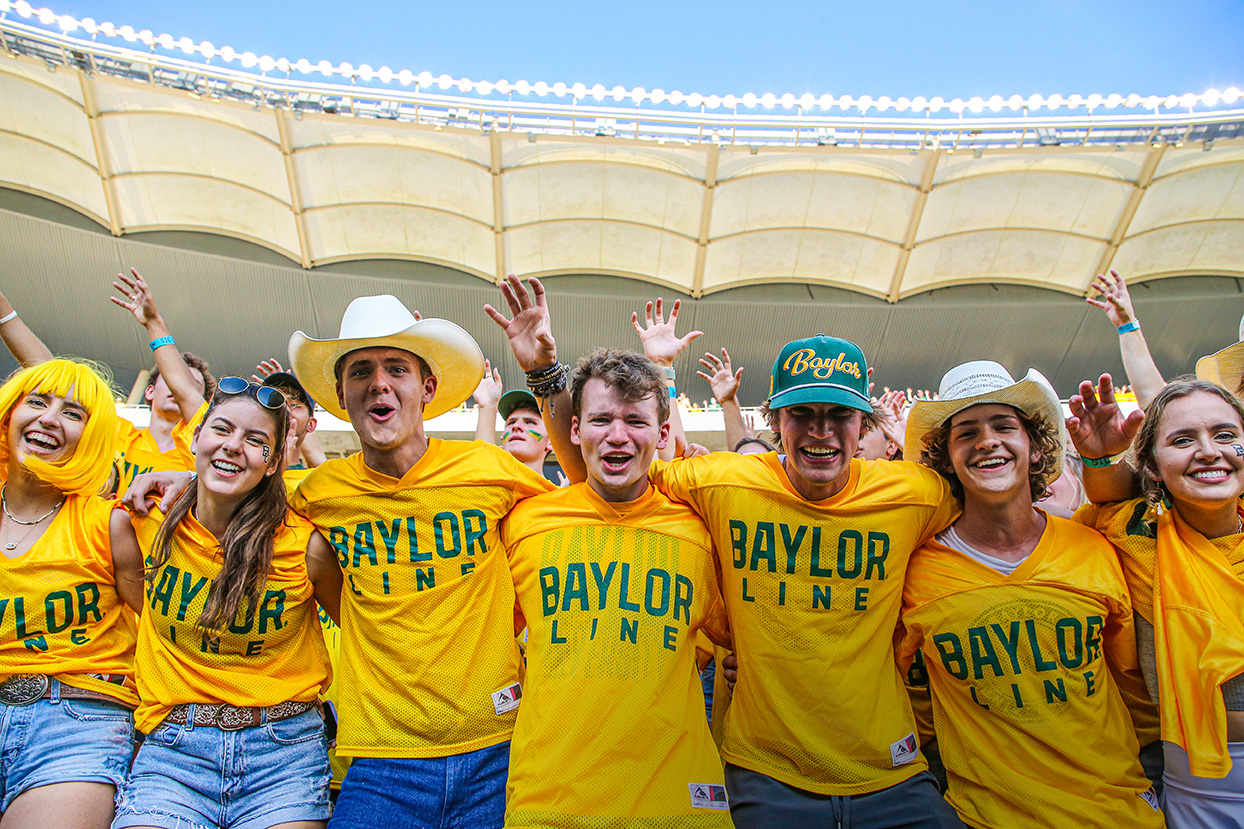
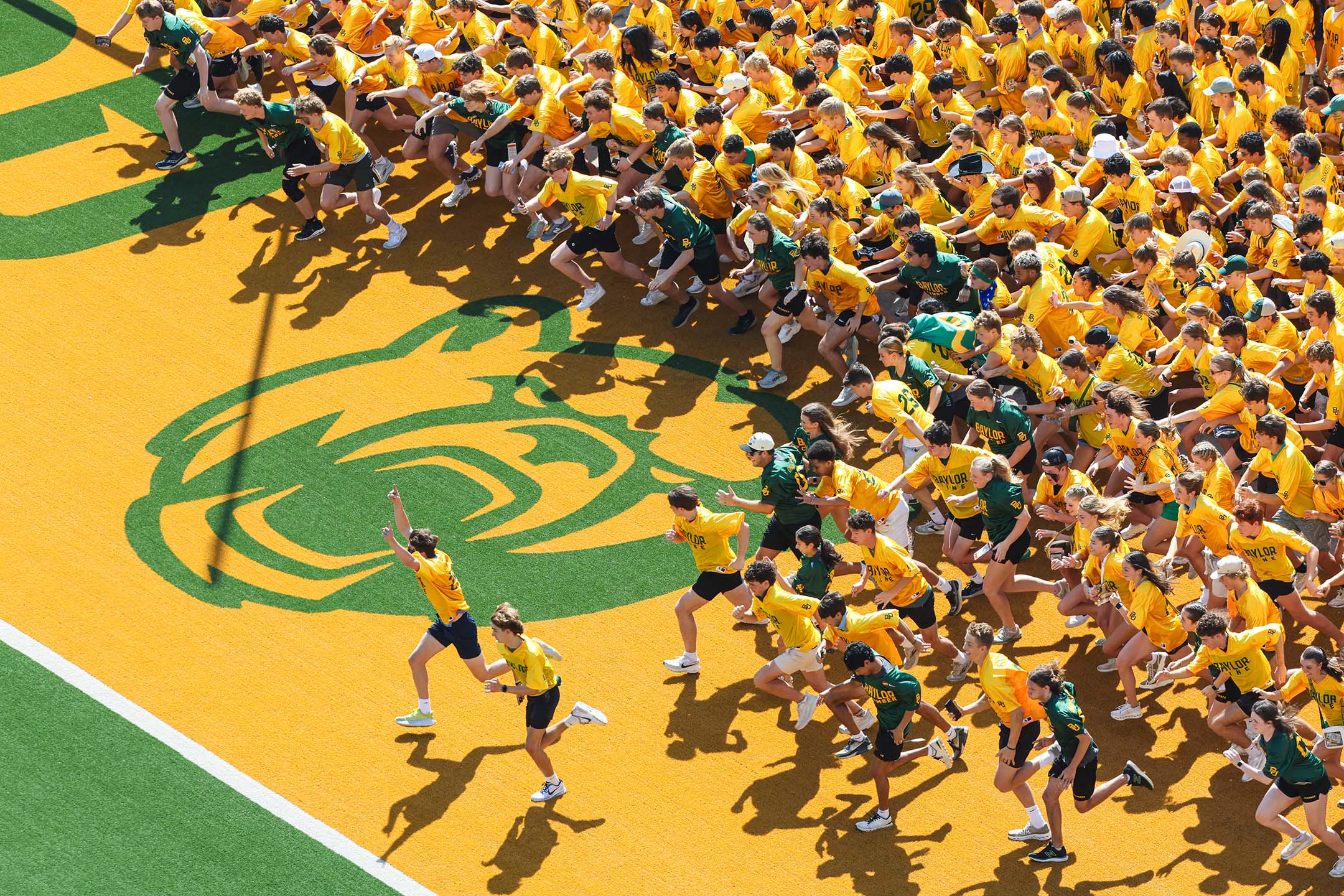
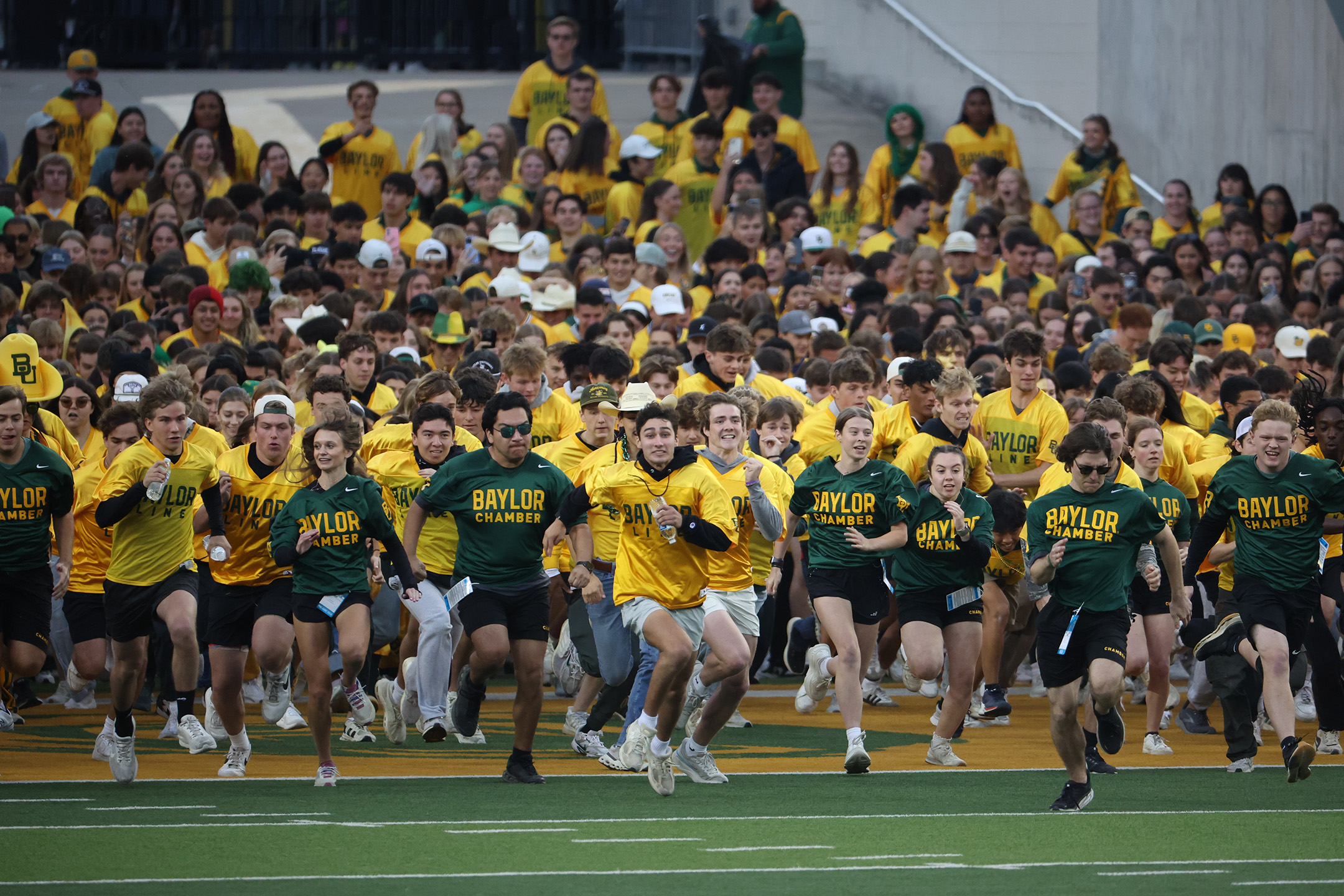
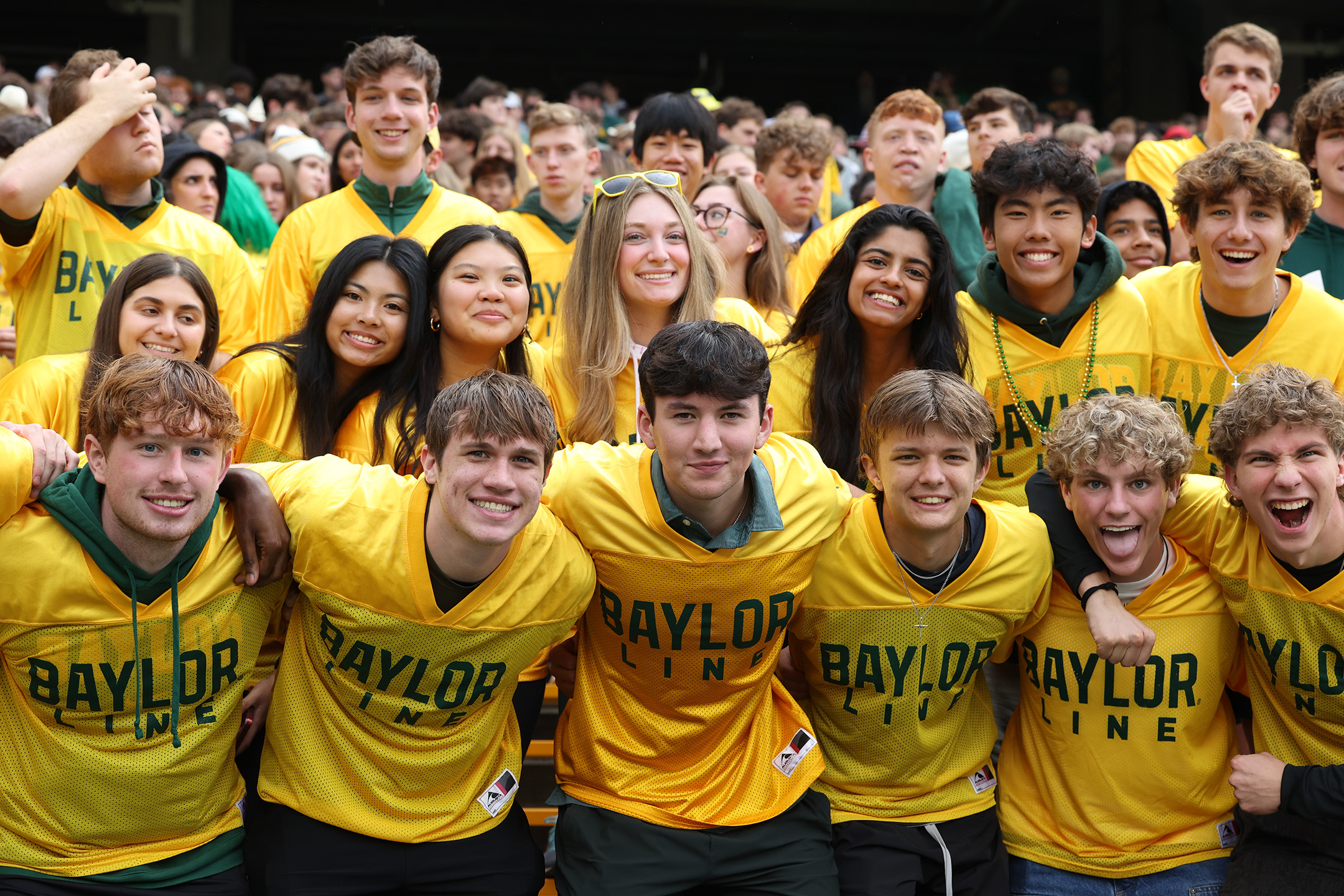
Established in 1970, the Baylor Line is composed entirely of new students and represents the commitment of the entire Baylor Nation to support and cheer on the Bears. As the leaders of the Baylor spirit, all new students arrive early and stay until the singing of That Good Old Baylor Line after each home football game. All new students represent this great tradition by wearing a football jersey with the number of their graduation year and a nickname on the back. Prior to each home football game, the Line will gather at the south end of McLane Stadium and, led by the cheers of alumni and fans, run onto the field and create an enormous human tunnel to welcome the football team to the field. After each player and coach has entered the stadium, the Line takes their seats in an exclusive Baylor Line section behind the opponents' bench to cheer on the Bears to victory.
In 1960, Baylor's yell leaders introduced the "Bear Claw" hand signal, made by slightly curving all five fingers inward to form a claw, and the "Sic 'Em, Bears" yell. The initial reaction to the new traditions from students and faculty was mixed. The use of both the hand signal and yell was sporadic until Grant Teaff arrived as Baylor's head football coach in 1972. Teaff initiated a new era of Baylor football, and the "Bear Claw" and "Sic 'Em, Bears" yell came to symbolize pride in Baylor athletics. The "Bear Claw" is also raised high during the performance of Baylor's school song, "That Good Old Baylor Line," which is always followed with a "Sic 'em, Bears!" Football players traditionally hold up their helmets during the playing of the school song.
In 1978, Dr. Herbert H. Reynolds, then executive vice president, along with the vice president for student affairs and the director of the Baptist Student Union created Welcome Week to help students better prepare for their experiences at Baylor. The program featured intellectual, physical, religious, social and cultural information and activities. Today, more than 90 percent of entering freshmen participate in this special week where new students get the opportunity to meet new people, forge friendships, embrace traditions and begin their lives as Baylor Bears.
In 1897, while on a train to Bryan for a debate tournament, a member of the student committee which had previously been selected to choose appropriate colors for the University looked out the window at the wild spring dandelions and remarked that the vivid yellow and green flowers made a "lovely combination." Other committee members present agreed, and when they returned to Waco, the color combination of "green and gold" was recommended and readily adopted by the student body.
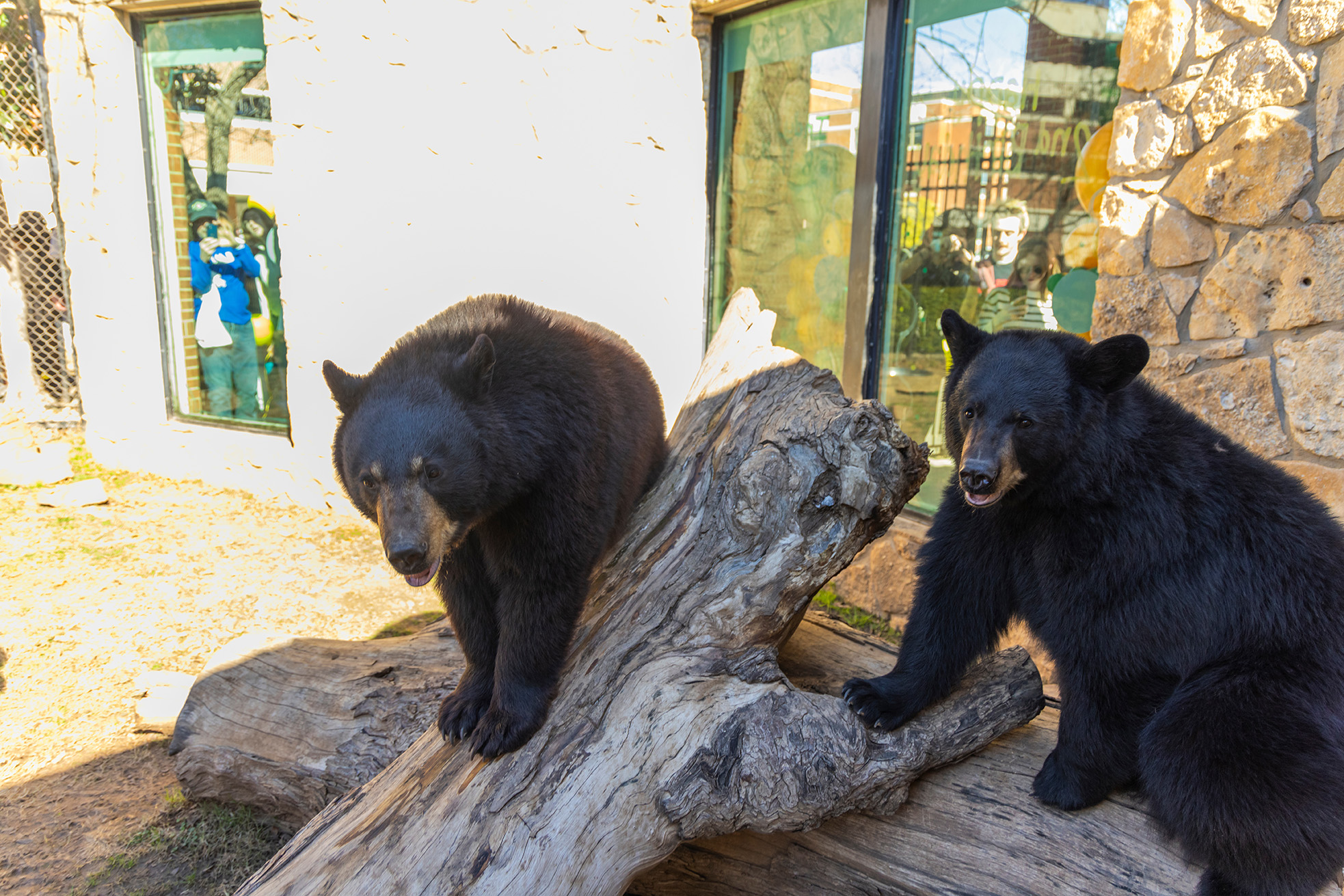
In 1914, after 70 years without an official mascot, Baylor students voted to name the Bear the official "Patron Saint of all Baylordom." More than two dozen animals were on the ballot, including the buffalo, eagle, antelope, bookworm and bear; the bear won convincingly. The first live bear to arrive on campus was a gift from soldiers at Camp MacArthur in Waco in 1917. Each bear mascot is given the title "Judge" in honor of the university's namesake, Judge R.E.B. Baylor. The bears are still housed on campus in the Bill and Eva Williams Bear Habitat; they are cared for by students in the Baylor Chamber of Commerce.
For more than 100 years, the Golden Wave Band has been an integral part of Baylor University, but it was not until 1928 that new uniforms inspired its lasting name. That fall, under the direction of Everett McCracken, the Baylor Marching Band introduced its new golden uniforms at a Baylor-SMU football game. The next spring, the 43-member group made a tour of west Texas on behalf of the Greater Baylor Campaign. A reporter wrote that the band seemed to be sweeping across the land like a Golden Wave!
Baylor students began wearing caps with the year of their anticipated graduation embroidered on them as early as the turn of the 20th century. By the 1940s, the nickname "Slime" was popular for Baylor freshmen. Entering students were required to wear their cap as a symbol of their status, usually with their name and hometown on the bill, which was turned up for others to see. Today, freshmen receive their slime caps at Slime Night early in the fall semester, and, while no longer required to wear them, new students proudly display their small green beanies featuring their year of expected graduation.
Ensembles from 17 organizations competed in the first "All University Sing" on April 25, 1953. First held in the Drawing Room of the Student Union Building, the popularity of the event gradually resulted in its relocation to Waco Hall. Today, throughout all of the changes in style, music, choreography and policies, much of Sing has remained the same. Student organizations perform 7-minute, Broadway-style productions in competition with one another, with the top eight acts advancing to participate in Pigskin Revue, a popular highlight of Homecoming week.
Since the turn of the century and the rise in popularity of athletic competition, various groups of individuals have led cheers for the Baylor teams. In 1920, the student body officially elected male representatives to lead the school yells, and in 1968, females joined their ranks. Today, Yell Leaders are part of the larger Spirit Squad that consists of Coed Yell Leaders, All-Girl Yell Leaders, the Songleaders, and our mascots Bruiser and Judge. The Baylor Spirit Squads support the athletic teams at Baylor University by generating crowd enthusiasm, promoting school spirit and supporting our athletes throughout the year.
The Saint John's Bible is the first hand-scripted on vellum, fully illuminated version of the Bible commissioned since the creation of the printing press more than 500 years ago. It was commissioned in 1998 by the Benedictine monks of Saint John's Abbey and University in Minnesota to ignite the spiritual imagination of believers throughout the world and to illuminate the word of God for a new millennium. In 2019, Baylor University acquired a limited Heritage Edition of the Saint John's Bible - the 105th of 299 that were created. The Heritage Edition series features the only full-size, hand-bound, signed and numbered fine art editions that will ever be produced. Each volume measures two feet by three feet, and its 1,115-plus pages include the calligraphy, vibrant imagery and gold and silver foil illuminations handcrafted by artists across the world. It is displayed at University commencement exercises and special ceremonies.
Value of a Baylor Education
Baylor offers the benefits and resources of a large research university and the family atmosphere of a smaller school. With generous financial aid, a wide range of student support services, athletics tickets and much more at no additional cost, it’s a uniquely holistic, personalized, community-driven experience that prepares you for your future.
90%+ of Baylor students receive financial aid (including merit-based scholarships)
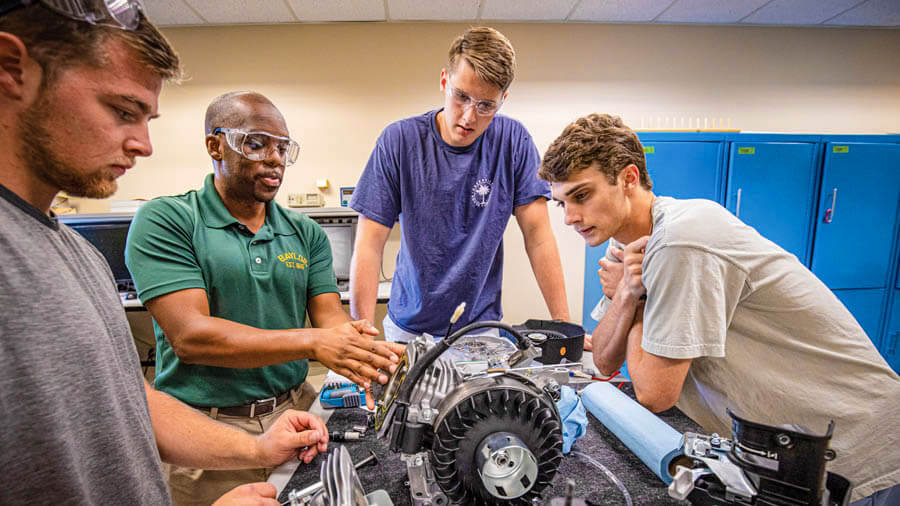
Hands-on research as early as freshman year
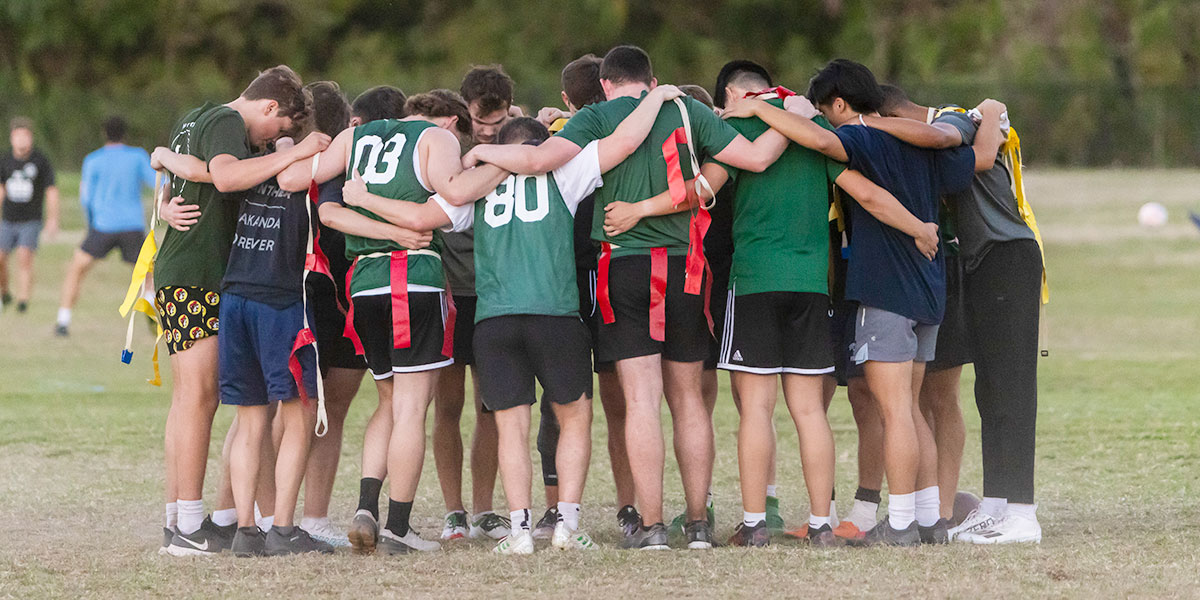
24/7 mental and physical wellbeing support with onsite clinics and telehealth
400+ student organizations
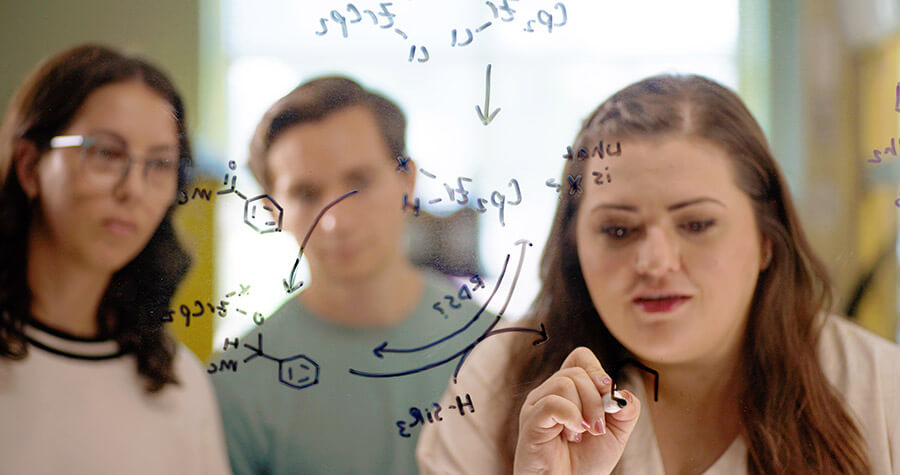
2k+students participate in leadership programs each year
16 unique living and learning communities support academic and personal interests
75% of students are involved in a student organization
R1Research University

125+ majors and pre-professional programs
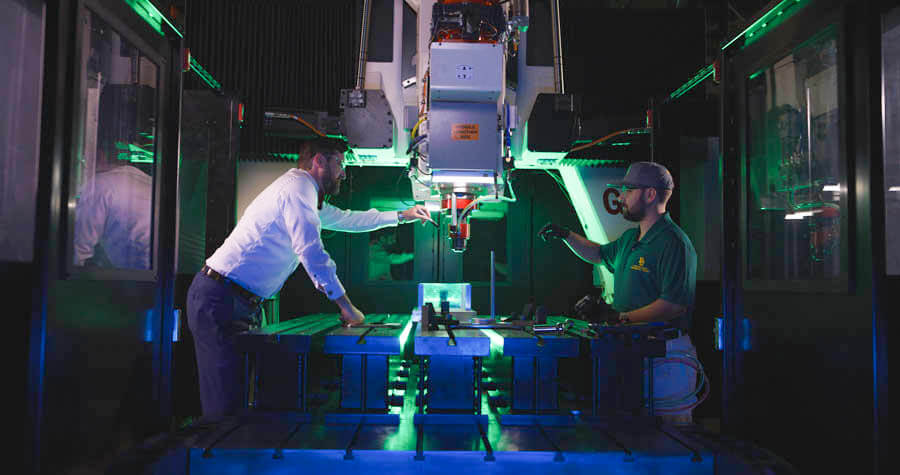
94% of classes taught by Baylor faculty (rather than grad students)
Free Athletic Tickets—Baylor undergrads get the best seats in the house
75%acceptance rate into medical school
71%acceptance rate into law school
1,000+ employers actively recruit on campus annually
Community Grounded in Faith
Life at Baylor is built around community and opportunities to grow friendships, and find support academically, personally and spiritually. Grounded in our Christian mission, we prepare the whole person for leadership and service.